Showing posts with label Joint pain. Show all posts

Tuesday, 2 September 2014

Joint Pain: In The Hips

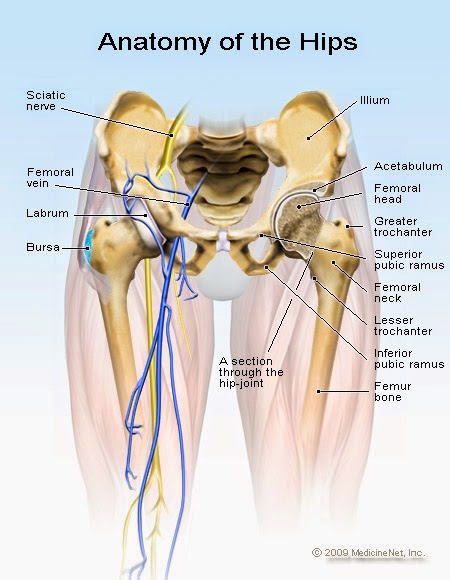
Hip joint pain is a pretty usual disorder. It has to be treated in the immediate context of the pain or else it holds back to cause severe discomfort. Patients of hip joint ache have to compromise mobility. Again there are various causes for this pain. A significant cause is off course arthritis. Often it is cured with medicine but importantly this sort of problem often leads to the requirement of a hip-replacement surgery.
http://helpyourback.org/health/hip-joint-pain-what-causes-it-and-how-to-treat-it/#

Trochanteric bursitis is a result of swollen bursa over the exterior of the hip joint and subsequently leads to severe joint pain. Tendonitis, in one of the tendons around the hip joint, could lead to hip joint pain too.

Amongst other reasons for hip joint pain we can count osteonecrosis, snapping hip syndrome, strained muscles or hip fractures, and other hip wounds. There are hip related problems which might happen in the course of childhood. These could develop into full fledged disorders in the adult stages. For an example we could consider developmental dysplasia, in which hips are misplaced in times of infancy. This could pose as a serious obstacle in the development of hip joints. While the child is growing these apparently innocuous ailments take serious dimensions and gradually turn out to be arthritis and obstruct normal motion.

There is yet another disease, called perthes, which can cause permanent damage to the hip joint in childhood. Off course all treatments for hip joint is contingent on the causes. Thus a correct diagnosis becomes necessary.

Use of warmth packs and ice bags is in common use to treat hip joint pains. Thee processes are good pain relievers. Rest is also one of the primary measures the patient is asked to adopt. The swelling is often brought under control by means of this. Pain relief is also sought by the same methods. Usage of crutches or walking sticks becomes a necessity in such times of joint pain in the hips.

Joint Pain: How Severe?

With age ailments start streaming in for humans. These ailments often are not ever lasting but in the case of arthritis we have a different case. With the rise of great joint pain one can be greatly perturbed. It is a form of great stress incurred by the human body and mind. Arthritis comes in 150 different forms. Yet natural treatments are mostly way more effective than usual prescribed drugs.

Inflammation is the one of the most significant concerns in the case of joint conditions along with warmth, redness and bone disorders. The term arthritis itself refers to the pain in the bone joints of the affected. The most usual symptoms borne by patients are inflexibility of bones along with great and never ending pain. The irritation is extreme and stalls normal mobile functions of the body. Yet touch can be felt around the affected area. The wrist, knee and hip joint are the most common sites of effect. Muscles are also tired out as a result of arthritis.

People are commonly hit by three kinds of the arthritis. These are Osteoarthritis, Rheumatoid arthritis and the gout. Among the three, osteoarthritis is initiated with the wearing out of the cartilage. All bones of human body are cushioned by cartilages to control friction resulting from the motion itself. With the onset of Osteoarthritis, cartilages are torn and the synovium fluid leads to great pain for the affected. This is an ailment which does not use gender to distinguish victims. It can happen to both men and women. Treatments might assume specific nature.

Rheumatoid arthritis can be called the auto immune disorder as rheumatoid arthritis is a condition in which the immune system actually attacks tissues in the host body, along with those that link the joints and the synovium. In this disorder women are more severely affected than men.

It is unfortunate that arthritis is not cured by specific treatments. Thus extra care needs to be taken in preventing this disease.

Friday, 29 August 2014

Joint Pain: Gout


In most cases gout pain first originates in the joints of the big toe and therefore in the feet. That hardly means that with the development of gout, greater amounts of uric acid accumulates in the system, and therefore travels to other joints of the body. This literally implies that gout pain travels to other parts of the body and carries the pain along with it. Thus the gout pain and the pain in your hip joint are connected. 


Of course, taking care of your gout can help cut down the degree of pain you experience in the hips. But this usually takes additional time. Immediate relief is often a clear necessity of these painful instances.  

The hip joint is the location of the connection between the pelvis and the leg. Thus it is natural that any kind of disorder there usually leads to great trouble. The very acts of walking and sitting are heavily impeded. Changing postures become extremely difficult according to the degree of pain felt.

Take NSAIDS in order to control gout and hip joint pains. These are necessarily pain killers which also contribute to the suppression of swellings. The joints are thus relatively relaxed. A greater degree of flexibility can be achieved in replacing the stiffness.

In case of specific and severe pain resulting from hip joints and gout can be helped by putting to use a treatment of heat and ice. Yet again the physician’s opinion should be south for this. The alternative application of heat and ice treatment can serve to be extremely useful in helping to reduce the swelling and can generate effective control in the case of the swelling trying to make its way back. Along with this, the usage of walking stick and restricted movement can be practiced to prevent the accumulation of fat in the course of limited mobility. Fast movements should be controlled. The postures in which one goes to sleep or sitting postures in general should be chosen with care.

In the longer time frame gout and joint pain should be treated with care and measures like exercise, etc. should be adopted albeit in consultation with the doctor. Other factors apart from gout can be explored to locate the cause of hip joint ailment. Such a diagnosis narrows down the cause and effects of the pain. Such diagnosis might help in the long run to fix or even reduce the pain resulting from such disorders. Correct measures regarding diet, medicine or a lifestyle as such can do wonders to such problems.

Monday, 25 August 2014

Joint Pain And Muscles

Medicine has traced joint and muscle pain to be rooted in a disease called Systemic Lupus Erythematosus (SLE). Almost everyone who is a victim of SLE feel muscle and joint pains in the course of the illness.

The swelling in joint and muscles is what causes pain. Symptoms might resemble that of viral flu; this illness is a coefficient of extreme pain in the joints and muscles. His sickness is accompanied by pain in the joints as well as the softening of joints. A lot of patients might not actually experience severe pain but their situation is not better as due to muscles and tendons becoming tender and inflammation there motor skills are hampered.

Joint and muscle pains often precede SLE. Even at rest a person can feel joint and muscle pain. The right combination of rest and exercise is often what doctors ask patients to implement when going through a phase of acute joint pain. While exercising or in the course of any activity extreme care has to be taken by patients to not further damage the already tender joints and muscles which are in an affected state.

Muscle and joint pain can attack any part of the body. But the parts of the body which are most affected by muscle and joint pain are, hip, shoulders and knees. Extra body weight contributes to the ailments of patients.

Again, SLE is might not be the only reason for muscle and joint pains. A mixture of ailments like arthritis and muscle injury can also cause such pain. Thus medical help has to be sought to diagnose and confirm the status of the disease.

Such pain is definitely amenable to treatment when found at an early stage. A permanent cure is often impossibility. Often the patient can be advised to undergo surgery to replace certain joints. The movements of a person are seriously impeded in the case of muscle and joint pain. Thus in case of such pain, a proper diet, a regular and carefully constructed exercise schedule along with adequate rest, all under medical supervision becomes necessary.